RBA Signals February Rate Hike
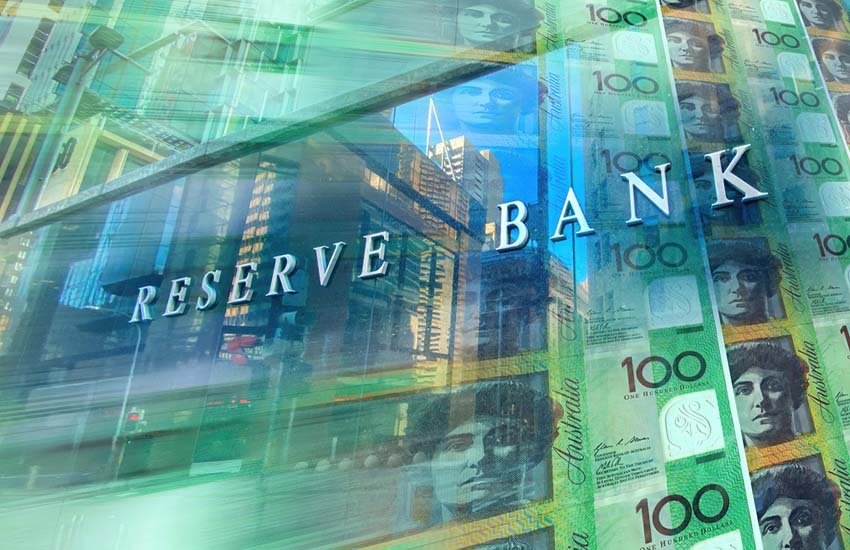
The Reserve Bank of Australia (RBA) is widely anticipated to raise its benchmark interest rate by 25 basis points to 3.85% at its February policy meeting, marking its first rate increase in more than two years as inflation accelerates.
The decision is scheduled for Tuesday at 03:30 GMT, alongside the release of the Monetary Policy Statement (MPS) and updated quarterly economic forecasts. RBA Governor Michele Bullock will then address the media at 04:30 GMT, offering crucial guidance on the future path of monetary policy.
Financial markets are bracing for heightened volatility in the Australian Dollar (AUD) as traders assess whether the central bank is preparing for a broader tightening cycle.
RBA set to defy global easing trend
If delivered, the February rate hike would place the RBA at odds with the broader global shift toward looser monetary policy, underscoring Australia’s growing inflation challenge.
Governor Bullock has made the central bank’s stance clear. Speaking after the December policy meeting, she emphasized that the RBA would act decisively if inflation failed to cool, stating that persistent price pressures would be addressed at the February board meeting.
Recent inflation data has strengthened that case. According to the Australian Bureau of Statistics (ABS), the monthly Consumer Price Index (CPI) climbed to 3.8% in December, up from 3.4% in November and exceeding market expectations of 3.6%.
Core inflation has also remained stubborn. The trimmed mean CPI, the RBA’s preferred inflation gauge, rose 0.9% quarter-on-quarter in Q4, beating forecasts of a 0.8% increase.
Markets and banks align on rate hike expectations
Following the stronger-than-expected inflation figures, money markets lifted the probability of a February rate hike to 73%, up from around 60% previously, according to Reuters.
Australia’s major lenders have also revised their outlook. ANZ, Westpac, Commonwealth Bank of Australia, and NAB now all expect the RBA to deliver a quarter-point hike this month.
Labor market data further supports the hawkish shift. The unemployment rate unexpectedly fell to 4.1% in December, its lowest level since May, while net employment surged by 65,200 jobs, reversing November’s sharp contraction.
What the RBA decision means for AUD/USD
The AUD/USD pair faces two-sided risks heading into the RBA announcement, with direction likely to hinge on Governor Bullock’s tone and the central bank’s updated forecasts.
A hawkish message, signaling the possibility of additional rate hikes, could reignite upside momentum in the Aussie dollar. Conversely, if the RBA frames the move as a one-off adjustment and downplays future tightening, the currency could come under renewed pressure.
AUD/USD is currently trading below the 0.7000 psychological level, consolidating after retreating from a three-year high of 0.7094. While the 14-day Relative Strength Index (RSI) has cooled from overbought conditions, it remains near 60, suggesting the broader bullish bias is still intact.
A hawkish outcome could push the pair back toward 0.7050, with resistance at 0.7094 and 0.7158. On the downside, a dovish surprise may open the door toward 0.6900, followed by 0.6850, with 0.6800 acting as a critical support zone.