Dollar Weakens, Currencies Rise
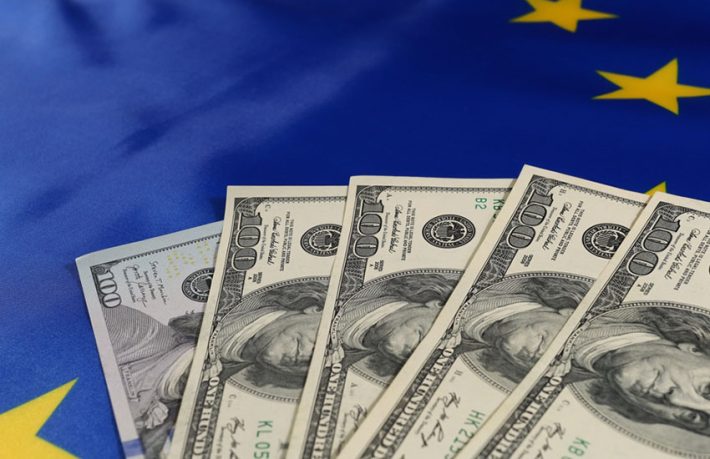
The U.S. dollar dropped to its lowest level in a month during Asian trading on Wednesday, April 8, as global currencies surged following a surprise geopolitical development. A temporary two-week ceasefire agreement between the United States and Iran sparked renewed confidence among investors, triggering a strong “risk-on” sentiment across financial markets.
Major currencies gained sharply against the greenback. The Japanese yen strengthened by 0.8% to 158.36 per dollar, while the euro climbed 0.7% to $1.1674. The British pound also rose 0.8% to $1.34, and the Australian dollar led gains with a 1.1% jump to $0.7054.
Ceasefire Announcement Reverses Market Sentiment
Earlier tensions had escalated after strong warnings from U.S. leadership regarding potential attacks on Iran’s infrastructure. However, the announcement of a ceasefire dramatically shifted market dynamics, easing fears of immediate conflict escalation.
Investor confidence rebounded quickly, especially as the agreement came just before a critical deadline tied to the reopening of the Strait of Hormuz, a key global oil shipping route. The potential reopening of this strategic passage further supported optimism in global markets.
Despite the strong upward momentum in risk assets, market analysts warn that uncertainty remains. Ray Attrill, Head of FX Strategy at National Australia Bank, noted that while the rally could continue, much depends on developments over the next two weeks.
He emphasized that markets may still experience volatility, as traders remain cautious about the sustainability of the ceasefire and broader geopolitical stability.
New Zealand Dollar Gains After Central Bank Decision
The New Zealand dollar posted strong gains, rising 1.5% to $0.5819. This followed the Reserve Bank of New Zealand’s decision to hold its policy rate steady at 2.25% for a second consecutive meeting.
While maintaining its current stance, the central bank indicated readiness to act if inflation pressures intensify, signaling a flexible approach amid global uncertainty.
Asian Markets and Crypto Join the Rally
In Asia, South Korea’s won surged 1.6% to 1,477.10, marking its strongest daily gain since the conflict began. This came despite renewed tensions on the Korean Peninsula, including recent missile launches by North Korea.
Meanwhile, cryptocurrencies also benefited from the improved risk sentiment. Bitcoin rose 2.9% to $71,327.07, while Ethereum jumped 5.6% to $2,233.90, reflecting increased investor appetite for higher-risk assets.
Dollar Index Hits Multi-Week Low
The U.S. Dollar Index, which tracks the currency against a basket of major peers, extended its decline for a third straight session, falling to 98.838, its lowest level since mid-March.
As markets continue to react to geopolitical developments and shifting monetary policy expectations, traders are expected to remain highly sensitive to incoming news over the coming weeks.
Oil Prices Drop as Focus Shifts to Central Banks
Oil prices saw a sharp decline amid easing supply concerns. Brent crude fell by 13.4% to $94.68 per barrel, although it remains significantly higher than levels seen before the conflict began.
With geopolitical risks temporarily subdued, investor attention is now turning toward central bank policies. Interest rate expectations are shifting, especially in the United States, where markets are increasingly pricing in the possibility of a rate cut by the Federal Reserve later this year.