
German DAX Below Recent Highs
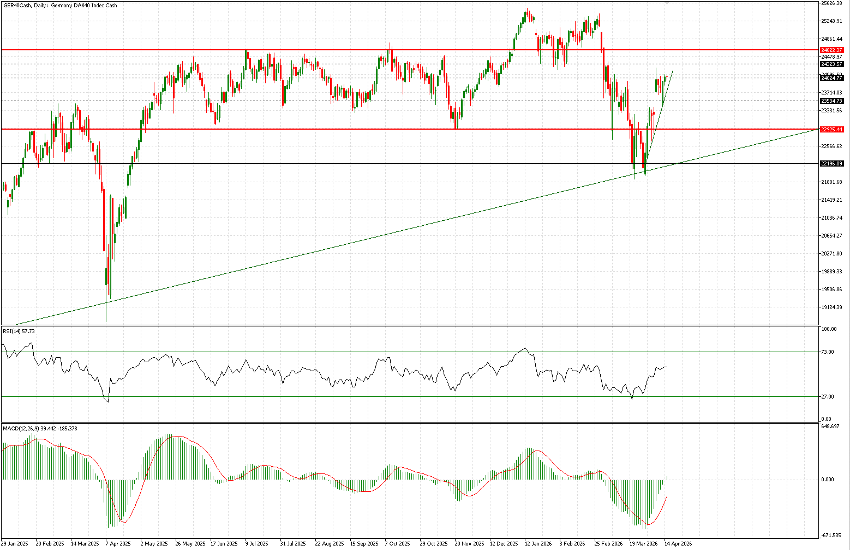
Unlike other indices—including the American S&P 500, the Italian FTSE MIB, and the Spanish IBEX 35—which have quickly and somewhat surprisingly returned to within touching distance of their recent or all-time highs, the German DAX has lagged in its recovery. In this respect, it more closely resembles the Dow Jones Industrial Average, likely due to its composition of major industrial groups and exposure to the value sector.
It is currently trading at 24,058, while its all-time high of 25,518 remains approximately 6% away. That said, it has reclaimed the range in which it traded for 10 months, between 23,000 and 24,600, a range it had briefly lost during the February–March correction. The rebound began around 21,900, where the long-term trendline—originating in October 2022 and tested again in October 2023, August 2024, and April 2025—remains intact. While the full trendline is not visible in the chart below, this highlights the importance of analysing higher timeframes to gain proper market perspective.
Looking ahead, near-term direction will remain driven by overall risk sentiment, currently influenced by expectations that negotiations between the United States and Iran may progress. However, reliance on such expectations introduces uncertainty.
From a technical perspective, 24,000 serves as a minor support level, with price currently holding above it. The next resistance stands around 24,300, followed by a more significant barrier near 24,625. On the downside, levels at 23,750 and 23,550 should be monitored closely.
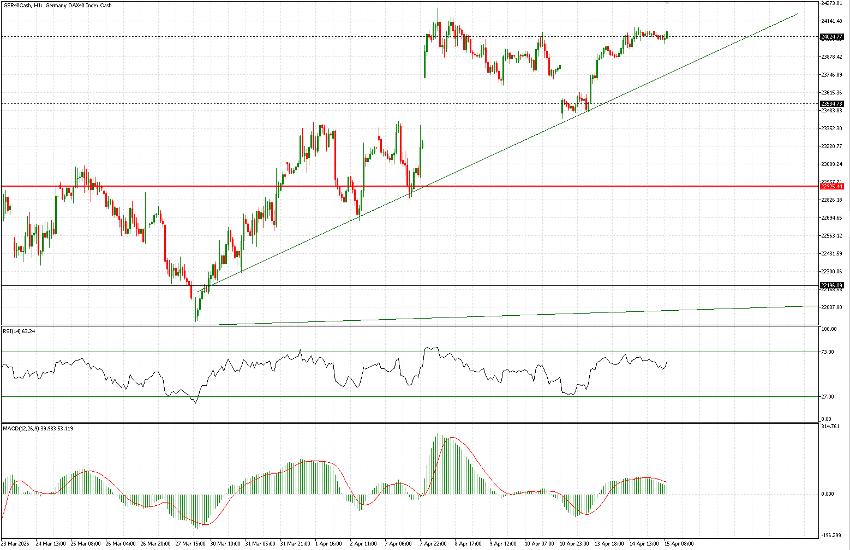
On the 30-minute chart, the short-term trend remains upward. Until a clear break occurs, continuation remains the base case. The trend-line currently intersects around 23,750, making it the key intraday level to watch.
